Original article written and published for the Cincinnati Enquirer.
Rosh Hashanah calls us to begin again − in our lives, our words, and the world we create.
In Judaism, we’re taught that Torah study sustains the world − a reminder that words shape our choices, our relationships, even our society. Spoken with care, words build. Spoken recklessly, they unravel − poisoning politics and costing lives.
We’ve seen children killed at a Catholic school in Minneapolis. A Jewish-American grandmother was murdered in Boulder. A Palestinian-American boy was stabbed to death in Illinois. Different communities, different circumstances, but a common thread: When words are twisted into weapons, they open the door to violence. When hate targets one, it endangers all.
The FBI reminds us what’s at stake: Hate crimes strike across communities. Black Americans face the highest share overall, and Jews − 2% of the U.S. population − face the highest share of religion-based hate crimes. Hate weakens us all.
That is the world we are living in. But it cannot be the world we accept. Not if we care about safety. Not if we care about democracy. Not if we care about humanity.
Democracy is Built on Relationships
America and Israel have pluralism embedded in their democracies. Here, we can hold many identities at once. In Israel, the vision of a shared society is fragile but worth defending. History reminds us that democracy is built not on victory but on reconciliation. Too often, we fall short of that vision. Across America, neighbors cross the street. Families split at tables. Officials face threats. This is more than ordinary division; it threatens the fabric of democracy. Healing begins when people take bold steps in relationship together.
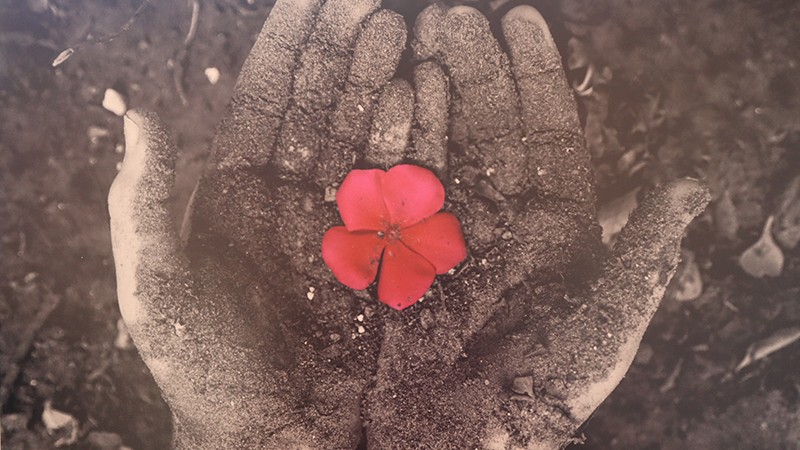
We saw a glimpse of what that looks like last week. Four teenagers from Israel − Jewish and Arab − shared their photographs and experiences with hundreds in Cincinnati. At home, they live in separate communities and attend separate schools; they rarely meet until college or work. But here, they chose to step outside those lines, willing to be uncomfortable in pursuit of a shared society. Sammi said, "Why wait for change when you can be the change?" Their teacher, Jenan Halabi, added, "Every friendship proves change is possible."
"Through Others' Eyes," a community-building project run by Givat Haviva that brings together Arab and Jewish teenagers for dialogue and shared experiences, shows that pluralism is not theory but lived practice. These teens remind us that even simple acts of being in relationship with one another can chip away at stereotypes and build something new. Change doesn’t come by accident. It comes when people decide fear will not have the last word.
Thirty years ago, Israeli Prime Minister Yitzhak Rabin was assassinated after a wave of incitement. His murder warned that unchecked rhetoric can unravel democracy from within. Tragically, we’ve seen echoes of this in America, too.
These lessons are why our community will gather at the Mayerson JCC on Nov. 5 for "For the Sake of Argument." Not to debate for our own sake, but to practice dialogue across differences. Scheduled one day after the anniversary of Rabin’s assassination, it underscores a hard truth: Democracy survives only if we can argue without dehumanizing − and disagree without destroying.
Renewal is personal and civic work
That call is at the heart of Rosh Hashanah. This is the season of beginnings. The shofar is meant to wake us up − in our private lives and in the society we are shaping with our words. Renewal is not just personal work. It is civic work, too.
The teens who came to Cincinnati showed us what that looks like. Their generation gives me hope. But hope on a shelf is not enough. It must be practiced, turned into action.
As we enter the Jewish year of 5786, my hope is simple: May this be a year of peace, healing, and stronger relationships. May we remember that words shape our culture, our democracy, and the future we leave.
Words can hold our democracy together − or help tear it apart. Let’s choose to come together − and build the words and relationships that heal.